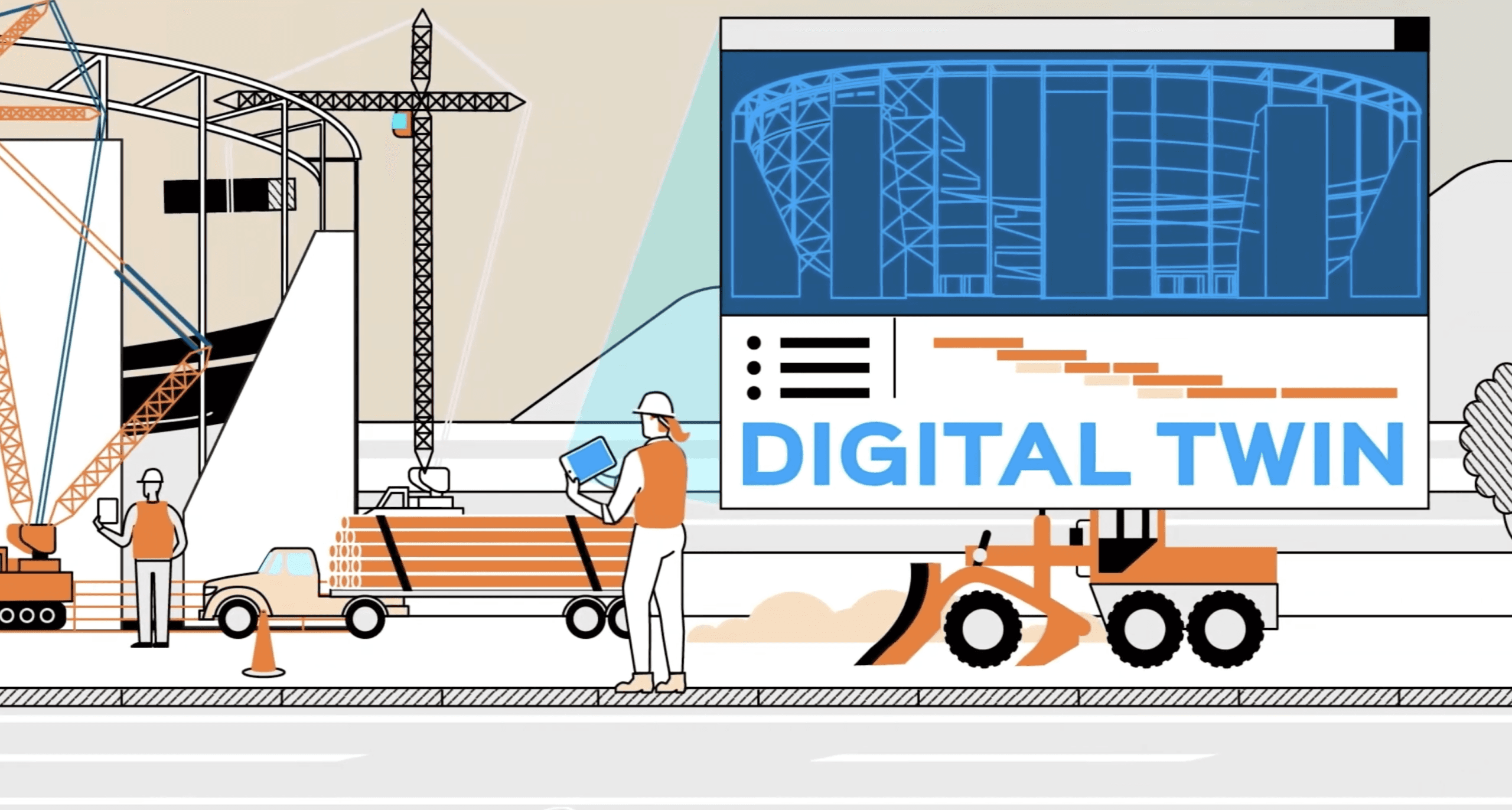
10 STRATEGIC APPLICATIONS OF DIGITAL TWINS: GUIDING VIETNAM’S FUTURE
The comprehensive landscape of Digital Twin applications in Vietnam is undergoing a strategic shift. This technology is gradually moving beyond the limitations of static 3D models. The goal is to create a comprehensive and seamless governance ecosystem.
In reality, Digital Twin is positioned as the core driver of the Industry 4.0 market. This development is strengthened by a solid legal framework, notably Resolutions 52 and 57 of the Politburo. The core objective is to realize smart urban planning and digital infrastructure.
However, the domestic system requires a clear upgrade roadmap. Therefore, we must compare this reality with ideal models successfully implemented globally. Below is a detailed analysis of 10 strategic applications of Digital Twins. The content is categorized into two core management groups: Government and Enterprises.
PART I. GOVERNMENT MANAGEMENT SECTOR
For governments, Digital Twins serve as a macroeconomic data infrastructure platform. This technology helps thoroughly solve macroeconomic problems in planning, environment, healthcare, and cultural preservation.
1. Smart City Planning (Smart Cities)
Firstly, GIS systems are the core strength for creating smart cities. For example, Singapore and Hanoi are applying Digital Twins to create a dynamic traffic simulation. This system allows authorities to accurately simulate vehicle flow. Additionally, it helps optimize land use planning and underground infrastructure management. Thanks to real-time data streams, managers can predict local congestion or flooding before they actually occur.
2. Environmental and Climate Simulation
On the other hand, climate change is becoming increasingly complex. Therefore, Digital Twins provide a powerful tool for ecological risk management. By digitizing river basins or forest ecosystems, scientists can establish simulation models. This makes it easy to assess the impacts of erosion or forest fires. Authorities will have a solid scientific basis to propose the most accurate planning and response measures.
3. Personalized Healthcare (Healthcare)
Despite facing security barriers, healthcare still offers the deepest humanitarian value. Specifically, doctors can create digital twins of a patient’s own internal organs. This virtual model is built based on a combination of MRI and CT scan data. As a result, medical teams can easily test complex surgical options on the ‘twin’ before real treatment. Ultimately, this opens up an era of personalized medicine with absolute safety.
4. Heritage Preservation and Virtual Tourism
Furthermore, heritage conservation is being significantly enhanced. This is due to advanced 3D scanning technologies like Gaussian Splatting. Thanks to this, hundreds of years old relics are digitized with an error margin of only millimeters. This data serves as a permanent archive for architectural restoration in case of incidents. Additionally, it is a platform for developing high-quality virtual tours.
PART II. ENTERPRISE SECTOR
For the private sector, Digital Twin is a highly practical technological weapon. This technology helps automate supply chains and drastically minimize equipment downtime.
5. Building Operations Management (Smart Buildings)
In reality, the combination of BIM and IoT has transformed commercial buildings into living entities. Specifically, temperature and light data are continuously synchronized into a 3D model. This allows managers to easily monitor energy consumption in real-time. Furthermore, they can remotely adjust HVAC systems very effectively. As a result, businesses reduce electricity consumption by up to 30% and meet strict green building standards.
6. Predictive Maintenance (Predictive Maintenance)
In modern factories, the ‘wait until it breaks, then fix it’ approach has been completely eliminated. Instead, Digital Twins continuously monitor the vibration and temperature of machinery lines. Through machine learning algorithms, the system provides extremely accurate quantitative warnings. For example, the system can predict that a spindle bearing will fail in 5 days. This proactive intervention helps businesses plan maintenance actively, completely eliminating the risk of sudden production stoppages.
7. Warehouse Optimization (Logistics)
At the same time, large distribution centers are also strongly applying Digital Twin platforms. Notably, Viettel Post has established a virtual twin for its entire storage space. This system simulates in real-time how pallets are arranged within the warehouse. Additionally, the system automatically calculates the most optimal movement routes for forklifts and autonomous guided vehicles (AGV). This not only maximizes space but also accelerates order processing speed.
8. Renewable Energy Monitoring
Notably, Digital Twins act as a central coordination tool for large-scale green energy farms. At wind power stations, the system uses simulation data to forecast wind direction. From there, the system automatically adjusts the blade angle to achieve maximum electricity output. Moreover, by combining images from Drones, Digital Twins can detect early micro-cracks that are invisible to the naked eye.
9. Autonomous Vehicle Testing (Automotive)
On the other hand, the development of self-driving cars requires a huge amount of training data. Therefore, leading automotive manufacturers conduct vehicle testing in virtual city environments. The system provides complete traffic scenarios and harsh weather conditions. Thanks to this, Artificial Intelligence (AI) is trained to handle simulated collisions with absolute safety and precision.
10. Aviation Industry (Aero-engine)
Finally, safety standards in civil aviation are always held to an absolute level. Therefore, corporations like Rolls-Royce have created Digital Twins for each aircraft engine. Throughout the flight, technical parameters are continuously transmitted to ground data centers. This allows the system to ensure maximum flight safety in real-time. Furthermore, the system automatically pre-plans maintenance and prepares supplies even before the aircraft lands.
——————————————————————————–
CONCLUSION
In summary, building a complete Digital Twin system requires a profound infrastructure transformation. To overcome the advanced simulation phase, agencies and businesses need to invest synchronously. Specifically, strong investment in 5G telecommunications infrastructure, cloud computing, and high-tech human resources. Continue to follow in-depth articles on Digital Twin applications at MH&T to grasp global technology trends.
With deep expertise and experience mastering international standards, the MH&T team confidently provides comprehensive digital transformation solutions. We are committed to fully meeting the specific characteristics of Vietnam’s infrastructure system. Therefore, contact MH&T today to start your project’s digitalization journey!
Illustration video taken from Bentley website.